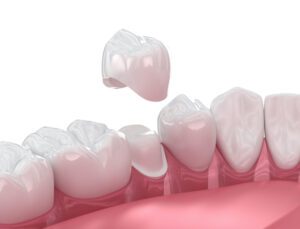
When someone says you need a “crown,” it sounds a little fancy. Like you’re about to get some kind of royal treatment. And honestly? That’s not too far off. A dental crown is basically a cap that fits right over your tooth. Think of it like a tiny helmet. It covers the whole visible part of your tooth down to the gum line, protecting everything underneath. Once it’s on, you can’t tell where your natural tooth ends and the crown begins. That’s the goal, anyway.
So when would you need one?
When a Filling Just Isn’t Enough
You’ve probably had a filling before. The dentist removes a small spot of decay, fills the hole, and you’re done. But sometimes a tooth has too much damage for a simple filling to fix.
Here are the most common reasons Dr. Harris might recommend a crown:
- A large cavity. If the decay is bigger than about two-thirds of the tooth’s width, a filling won’t hold up. It could crack or fall out. A crown wraps around the whole tooth and keeps everything stable.
- A chipped tooth. Not all damage is the same. A tiny chip might not need much. But a deeper fracture can spread over time, especially when you chew. A crown holds the tooth together so it doesn’t split apart.
- After a root canal. Once a tooth has had a root canal, it becomes more brittle. A crown protects it from breaking later on. That’s why most back teeth that get root canals also get crowns.
- A worn-down tooth. Some people grind their teeth at night without even knowing it. Over time, that grinding can flatten or damage teeth. A crown can build that tooth back up to its normal shape.
What About How They Look?
This is usually the first question patients ask. And we get it. Nobody wants a bright silver cap sitting in the middle of their smile.
The good news is that modern crowns look incredibly natural. Dr. Harris uses crowns made from porcelain or ceramic materials that match the color of your surrounding teeth. They reflect light just like real enamel. Unless you point it out, nobody will ever know it’s there.
For back teeth that do most of your chewing, we might recommend a stronger material like porcelain fused to metal. It’s still tooth-colored, but it has extra strength for the heavy lifting.
What Happens During a Crown Appointment?
On your first visit, Dr. Harris will numb the area so you’re comfortable. She’ll remove any decay and shape the tooth so the crown can fit over it. Then she’ll take digital impressions, no goopy putty in your mouth. Those impressions get sent to a lab, and you’ll leave with a temporary crown to protect your tooth in the meantime.
About two or three weeks later, you’ll come back. We’ll take off the temporary, check that the permanent crown fits perfectly, and bond it in place. That’s it.
How Long Do Crowns Last?
With good care, a crown can last 10 to 15 years or even longer. Just take care of it like a regular tooth. Brush twice a day, floss once a day, and keep coming in for your routine cleanings.
The only difference is that flossing around a crown takes a little extra attention. We’ll show you the easiest way to do it. Takes about 10 extra seconds.
Not Sure If You Need a Crown?
If you’ve been putting off a chipped tooth or a large filling that feels weird, don’t wait. Small problems are easier to fix than big ones.
Give us a call at 919-899-4467. Dr. Harris and the team at Oak Grove Family & Cosmetic Dentistry will take a look, answer your questions, and help you figure out what’s right for your smile. No pressure. Just real talk.